Wearable biomechanics · 2023–present
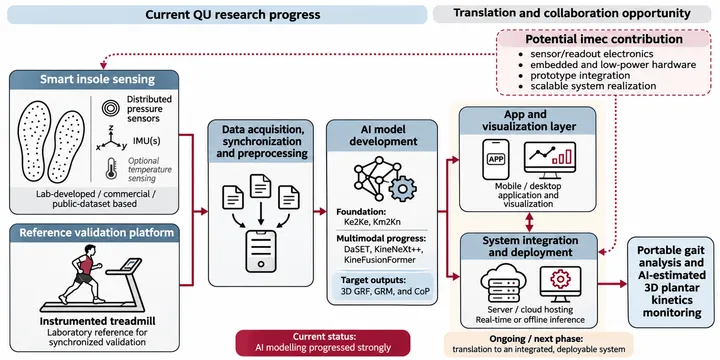
AI-powered smart insoles for 3D gait kinetics
Reconstructing 3D forces, moments, and centre of pressure from smart-insole loading and wearable motion sensors.
Research Associate · Qatar University
Department of Electrical Engineering · Doha, Qatar

I use machine learning to study human movement and disease through medical images, wearable sensors, and spectroscopy. I work with engineers and clinicians to make these measurements more reliable across people and devices.
Wearable biomechanics · 2023–present
Reconstructing 3D forces, moments, and centre of pressure from smart-insole loading and wearable motion sensors.
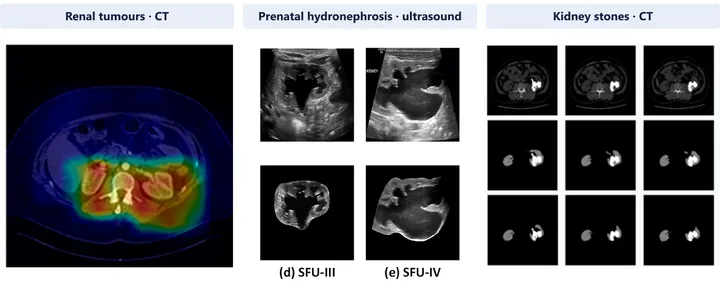
Medical imaging · 2021–2026
Classifying renal tumours and segmenting kidney stones on CT, and grading prenatal hydronephrosis on ultrasound.
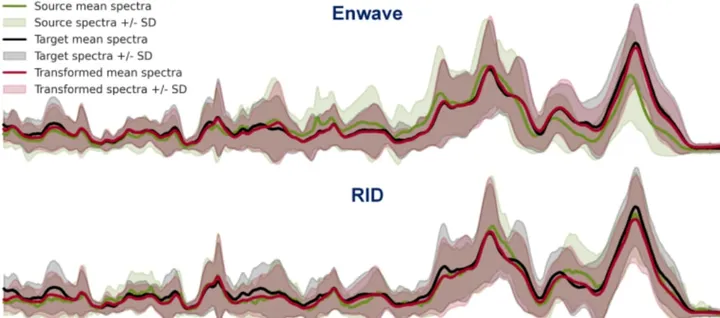
Spectroscopic sensing · 2025–present
Standardising surface-enhanced Raman spectra across instruments, recognising sepsis pathogens from blood, and examining how well microbial SERS models are validated.
Wearable biomechanics
Combining wearable motion and plantar pressure to estimate forces, moments, and centre of pressure across people and sensor layouts.
Medical imaging
Combining smartphone photographs with radiometric thermal images of the feet to identify diabetic neuropathy and grade foot ulcer severity.
Medical imaging
Adapting a medical segmentation foundation model to outline the liver and liver tumours on CT across contrast phases and independent cohorts.
Talanta · 2027 issue · Online 2026
Reviews 129 microbial SERS studies, with an emphasis on biological independence and external validation.
Biomedical Signal Processing and Control · 2026
Narrows the search to kidney and stone slices before delineating small stones in CT scans.
Computers in Biology and Medicine · 2021
Segments lung and infection regions on chest radiographs to localize and grade COVID-19 pneumonia.
Department of Electrical Engineering · Qatar University · Doha, Qatar